our member countries


















PRESS
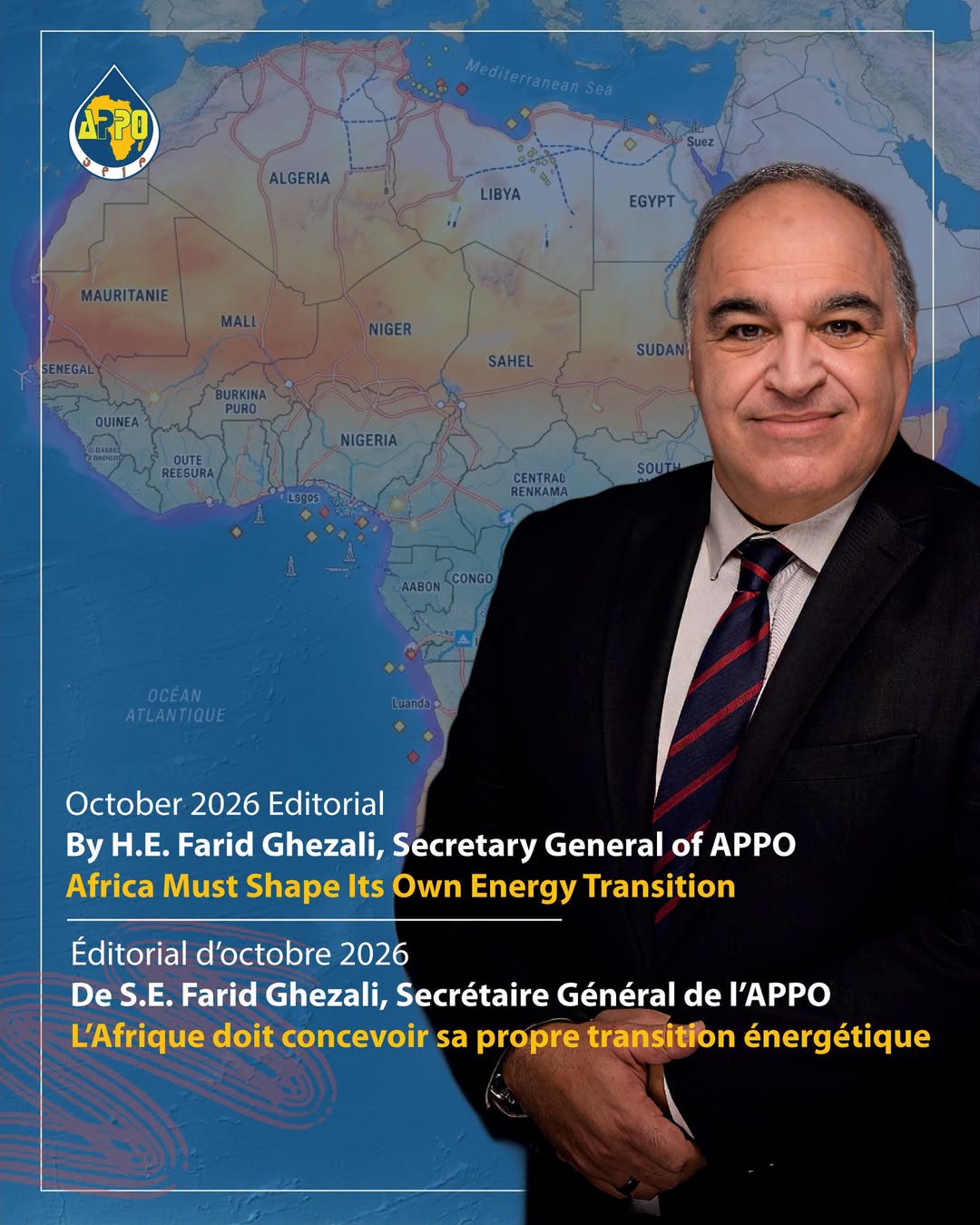
Africa Must Shape Its Own Energy Transition
The global energy transition is accelerating, but it must not come at Africa’s expense. As external pressure intensifies to restrict the financing of hydrocarbons on our continent, it is time for African producers to advance a clear, coherent and confident narrative: a transition that is just, realistic and centred on Africa’s human and industrial development.
This is not a narrative that we promote only in international forums. We are translating it into action.
The Africa Energy Bank, jointly launched by the African Petroleum Producers’ Organization (APPO) and Afreximbank, is the financial instrument through which this vision can be implemented. Its mandate is to finance the energy projects that Africa considers strategic and necessary: oil and gas, natural gas, refining, gas infrastructure, renewables, electricity networks and energy efficiency.
Energy poverty: Africa’s first climate challenge
The figures are well known, but they must be repeated until they become impossible to ignore in the international debate.
Nearly 600 million Africans still lack access to electricity, representing approximately 85% of the global electricity-access deficit. In sub-Saharan Africa, the electrification rate is approximately 53%, with considerable disparities between urban areas—where access exceeds 80%—and rural areas, where it is often below 40%. Nearly one billion Africans still lack access to clean cooking solutions.
At the same time, Africa’s electricity demand is expected to more than triple by 2040, rising from approximately 878 TWh in 2021 to nearly 3,280 TWh, driven by population growth, urbanisation and industrialisation needs.
Meeting this demand will require more than USD 200 billion in annual energy investment by 2030, across all energy sectors. Yet annual investments dedicated to electricity access in sub-Saharan Africa remain below USD 3 billion—far below actual requirements.
This is not merely a development challenge. It is an issue of dignity, social stability and, ultimately, climate resilience.
A continent that cannot reliably power, cool or industrialise its economy will not be able to adapt effectively to climate shocks, let alone contribute constructively to global climate action.
A transition imposed from outside could deepen inequality
Against this backdrop, the dominant narrative on the energy transition, as advanced by certain donors, financial institutions and Western public opinion, raises serious concerns.
Under the banner of climate action, it too often results in:
- The progressive withdrawal of public and private financing from African oil and gas projects, even when those projects are essential to local and regional energy security.
- Pressure to “stop all new fossil-fuel financing”, without distinguishing between mature economies that have already achieved high levels of energy access and African economies that are still struggling to provide basic electricity access. Africa bears only a limited responsibility for historical greenhouse-gas emissions, accounting for less than 5% of global emissions.
- An almost exclusive focus on intermittent renewable energy, without sufficient support for grids, storage, back-up solutions and gas infrastructure needed to ensure the stability of electricity systems.
The result is predictable: a continent rich in resources but increasingly dependent on imports of refined products, liquefied natural gas and foreign technologies, at higher cost and with weakened energy sovereignty.
If this approach is not corrected, the energy transition could become a new source of inequality between the Global North and the Global South. Africa would be asked to “skip the hydrocarbons stage” without ever having fully benefited from hydrocarbons’ contribution to industrialisation, infrastructure development and poverty reduction.
What Africa is asking for: a just, realistic and sovereign transition
In the face of these pressures, Africa does not have to choose between development and climate action.
It must demand a transition that reflects its realities and respects its priorities.
Recognise Africa’s right to use its resources for development
African hydrocarbons are not a climate problem to be eliminated. They are a development asset to be managed responsibly and used efficiently.
Natural gas, in particular, must be recognised as an essential transition energy source for Africa:
- It can fuel reliable and flexible power plants capable of complementing intermittent renewable energy.
- It can replace firewood and coal in cooking and industry, thereby reducing deforestation and local air pollution.
- It can support local industries—including fertilisers, petrochemicals and materials—that create value and employment.
Telling Africa to “leave its hydrocarbons in the ground” while importing electricity, diesel or LNG produced elsewhere is neither coherent from a climate perspective nor acceptable from a political and social standpoint.
Make energy access a central pillar of climate justice
Climate justice cannot be limited to emissions-reduction commitments by countries that have already achieved high levels of energy consumption.
It must include:
- The right to energy for the hundreds of millions of Africans who still lack access.
- Financing mechanisms that do not penalise projects required for electrification, clean cooking and low-carbon industrialisation.
- Explicit recognition, in international frameworks—including COP decisions, climate agreements and development-finance strategies—of the legitimate role of African hydrocarbons in a lower-carbon but socially inclusive development pathway.
Africa must not be asked to carry the cost of a global transition that it did not create and from which it has not benefited equally.
Building African solutions for financing and governance
The relative withdrawal of Western financing from hydrocarbon projects makes it imperative for Africa to take greater responsibility for its own energy future.
That is the purpose of the Africa Energy Bank, promoted by APPO and Afreximbank, whose launch is expected by the end of 2026.
The Africa Energy Bank must not be seen merely as a financing institution for oil and gas projects. It is also:
- An instrument of sovereignty, enabling Africa to define its own energy priorities while balancing hydrocarbons, renewables, electricity networks and energy efficiency.
- A catalyst for additional capital, mobilising African sovereign wealth funds, African institutional investors and South–South partners around a shared vision.
- A framework for strong environmental and social standards, adapted to African realities and supported by appropriate technical and financial assistance rather than imposed externally without support.
While some seek to impose on Africa an energy transition that would deprive the continent of the use of its own resources, the Africa Energy Bank affirms Africa’s right to determine its own energy mix.
It is Africa’s response to the retreat of certain Western financing sources: an African institution, capitalised by Africans, to finance African priorities.
The Africa Energy Bank is not an instrument against the energy transition. It is an instrument for a transition that is just, realistic and sovereign.
It will help finance projects that create value, jobs and accessible energy, while applying strong environmental and social standards.
An industrial strategy, not only an energy strategy
Africa’s energy transition must also be an industrial transition.
We must not limit ourselves to exporting crude oil, natural gas, electricity or renewable-energy potential. We must develop industries around these resources.
This means investing in:
- refining and petrochemicals;
- fertiliser production;
- gas processing;
- equipment manufacturing;
- transmission and storage;
- renewable-energy components;
- hydrogen and its derivatives;
- and technical and professional skills.
The true test of an energy project is not only how much energy it produces. It is how much local value it creates.
Every major project should therefore be evaluated according to its contribution to:
- energy access;
- industrialisation;
- employment;
- technology transfer;
- local enterprise development;
- government revenues;
- and regional integration.
Africa must move from being a supplier of raw materials to becoming a producer of energy, products, technologies and solutions.
A collective narrative: Africa as an actor, not a spectator
The global energy transition is inevitable. But it must not become an excuse to confine Africa to the role of raw-material supplier and consumer of foreign technologies.
African oil and gas producers, through APPO and their national institutions, have a responsibility to advance a clear and consistent narrative:
- A continent that acknowledges its resources and uses them responsibly, transparently and efficiently.
- A region that invests in all forms of energy required for its development: hydrocarbons, gas, renewables, grids, storage and energy efficiency.
- A credible partner in the fight against climate change, but one that refuses to bear the cost alone at the expense of its populations and industrialisation.
- A continent that expects fair partnerships, technology transfer, appropriate financing and shared responsibility.
This narrative must be defended consistently in international forums—including COP meetings, energy summits and financial institutions—in bilateral dialogues with traditional partners, and above all in Africa’s public space, among citizens, young people, investors and decision-makers.
Conclusion
Africa is not rejecting the energy transition.
Africa is demanding to participate in it on fair, realistic and sovereign terms.
We are ready to reduce emissions, improve efficiency, expand renewables, reduce methane and develop cleaner technologies. But we are equally determined to end energy poverty, industrialise our economies and ensure that our people have access to reliable and affordable energy.
The Africa Energy Bank embodies this balance.
It represents an Africa that is taking responsibility for its future, mobilising its own capital and defining its own priorities.
The choice before us is not between hydrocarbons and renewables, nor between development and climate action.
The real choice is between a transition that deepens inequality and one that creates opportunity.
Africa’s position is clear: we want a transition that is just, realistic, inclusive and development-oriented.
We want an Africa that is not a spectator of the global energy transition, but one of its authors.
And we want an energy future that delivers not only lower emissions, but also electricity, industry, jobs, dignity and prosperity for all Africans.
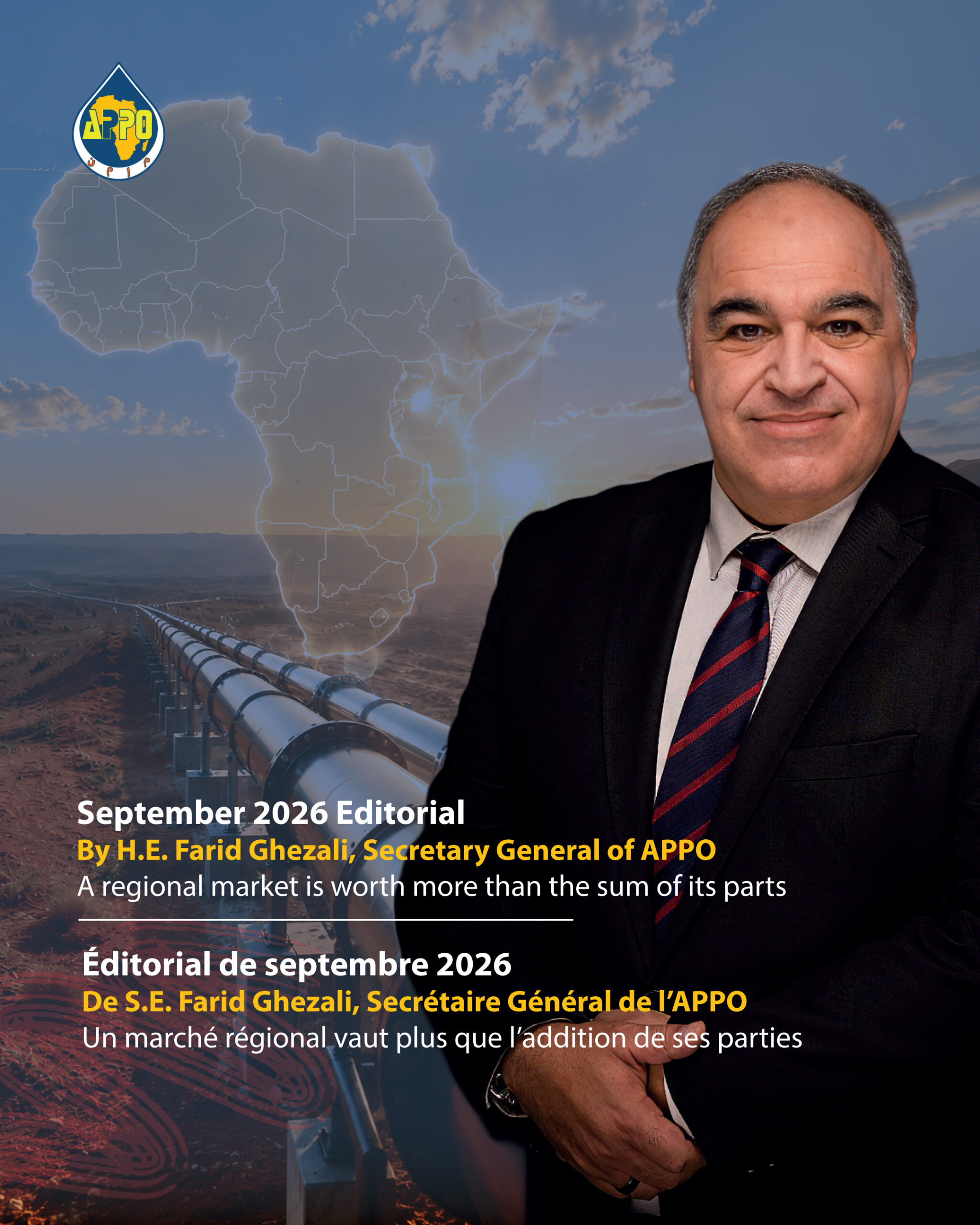
His Excellency FARID GHEZALI
Secretary General, APPO
Brazzaville, october 2026