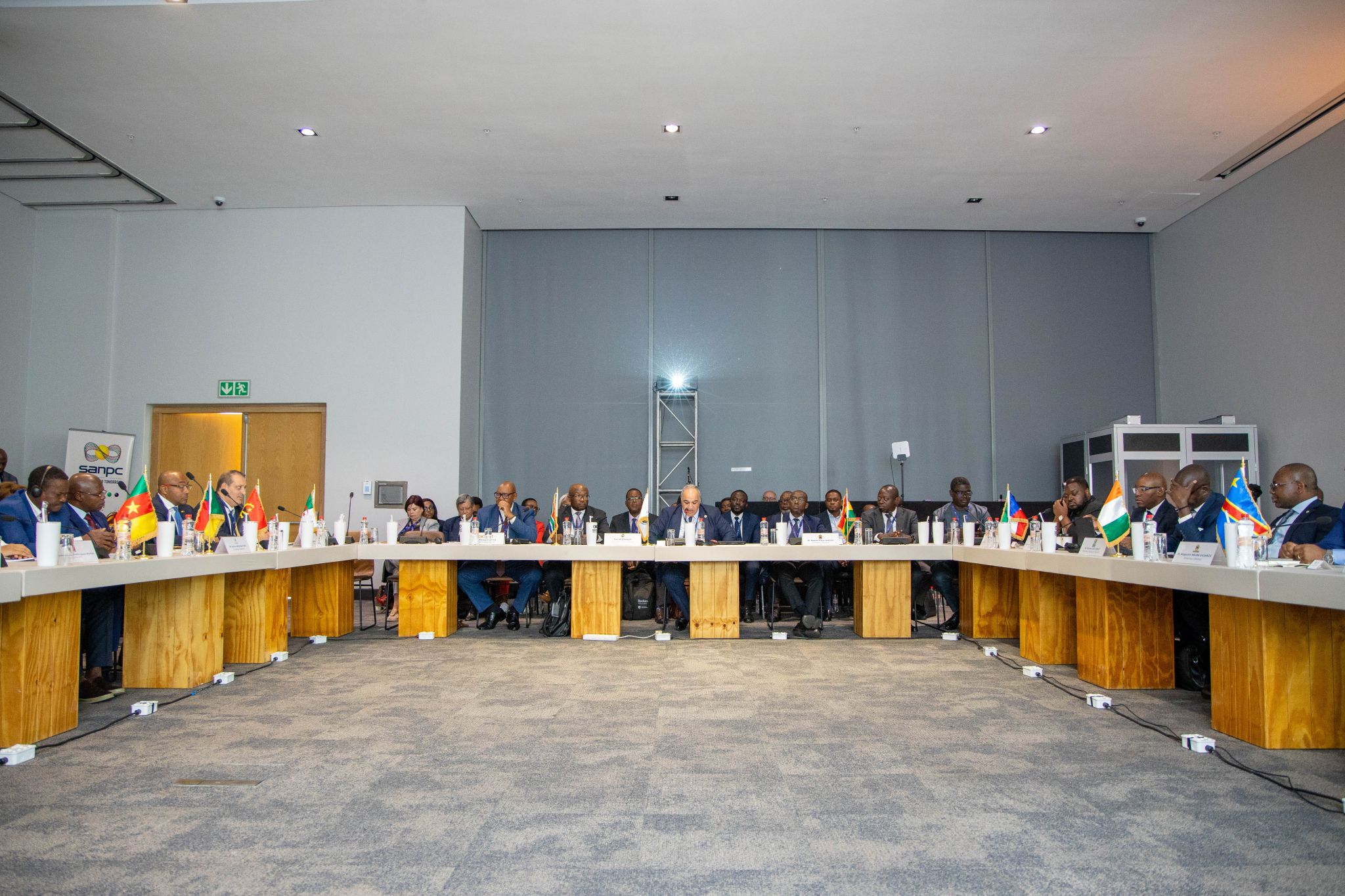
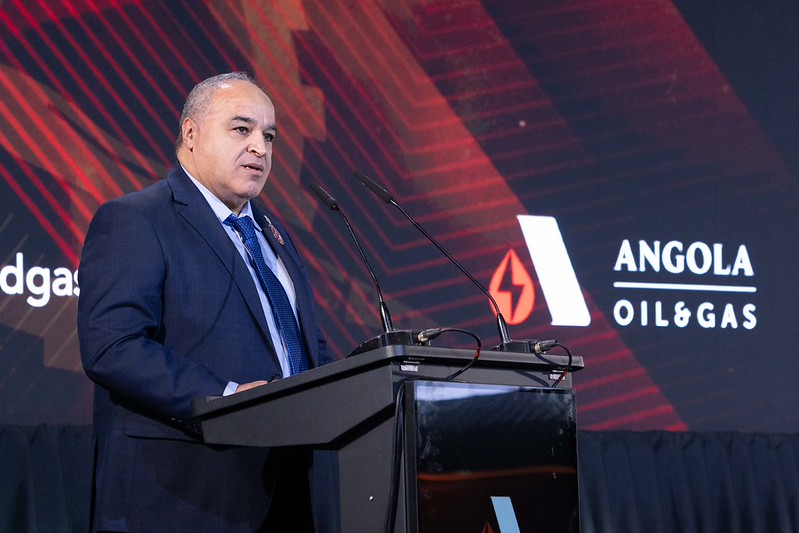
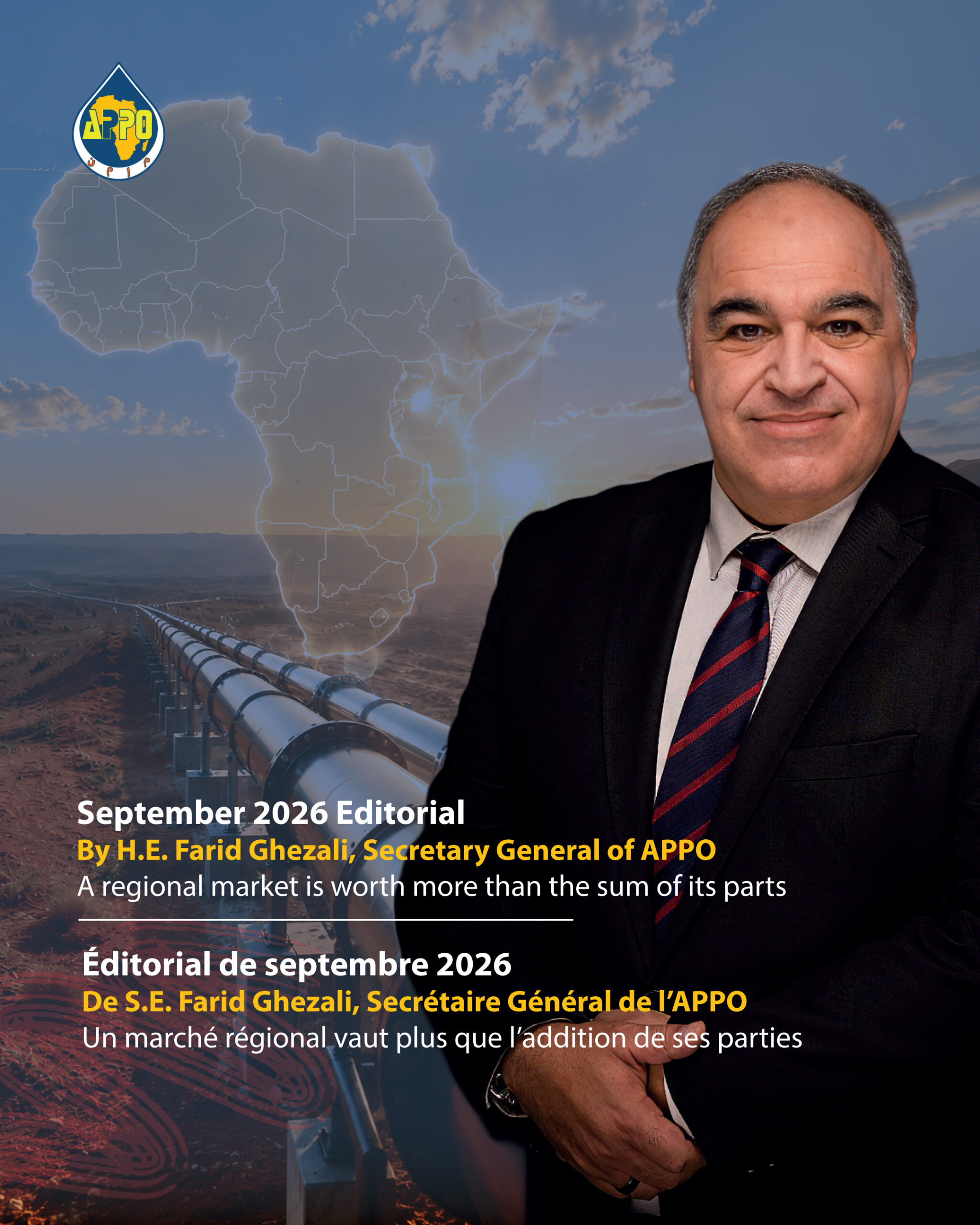
It is a great honour for me to take part in African Energy Week for the first time as Secretary General of the African Petroleum Producers’ Organization.
Over the years, African Energy Week has established itself here in South Africa as an important meeting place for Africa’s energy community bringing together governments, investors, industry leaders, financial institutions and partners around the future of our continent.
I wish, at the outset, to express my sincere appreciation to our South African hosts for their continued hospitality, and to the African Energy Chamber for maintaining this important platform for dialogue, partnership and investment.
Cape Town has become closely associated with this African energy conversation.
And it is fitting that, once again, we gather here not only to discuss the resources Africa possesses, but more importantly, to consider how those resources can better serve Africa’s development.
Ladies and Gentlemen,
(1) This year’s theme
“Invest in African Energies: Affordable and Abundant Energy Additions” speaks directly to the challenge before us.
(2) Africa is richly endowed with energy resources.
Oil. Gas.
Hydropower. Solar.
Wind.
Geothermal energy.
And many other resources that can support the transformation of our economies.
Yet the fundamental question is no longer whether Africa has energy.
The question is whether Africa can turn its energy resources into energy security, industrial capacity and prosperity for its people.
(3) This is where the concept of energy addition becomes particularly important.
For Africa, the energy transition cannot simply mean replacing one source of energy with another.
(4) Our reality requires us to add.
To develop our oil and gas responsibly. To accelerate renewable energy.
To strengthen our electricity systems.
To invest in storage, infrastructure and technology.
And to connect our national and regional energy markets.
(5) Because our starting point is different.
Millions of Africans still lack reliable access to electricity. Many of our industries continue to face high energy costs.
And many of our economies still export resources while importing a significant share of the value created from them.
For us, therefore, energy policy cannot be separated from development policy. Energy access, energy security and industrialization must advance together.
Ladies and Gentlemen,
(6) Our ambition must also go beyond producing more energy.
The true measure of success will be the value that this energy creates on our continent.
So the question is not only:
How much energy can Africa produce? It is also:
How much value can Africa create from its energy? This is a fundamental question.
For too long, much of Africa’s energy wealth has left our continent in the form of raw resources, while a significant share of the industrial value associated with those resources has been created elsewhere.
(7) That model must evolve.
Our oil and gas resources must increasingly support African refining,
(8) petrochemicals, fertilizers, power generation and manufacturing. Our renewable resources must contribute to African industrial capacity.
Our critical minerals must support value chains that extend beyond extraction. And our energy investments must generate lasting benefits:
Jobs.
Skills.
Technology. Infrastructure.
And stronger African companies.
(9) This is the deeper meaning of local content.
For APPO, local content is not simply about percentages. It is about capability.
It is about industrial capacity.
It is about ensuring that Africa participates more fully in the value created from its own resources.
Ladies and Gentlemen,
(10) The first words of this year’s theme are equally important: “Invest in.”
Because ambition without investment will remain ambition. Africa has the resources.
Africa has growing demand.
Africa has a young population.
And Africa has extraordinary economic potential.
What we must now do is create the conditions that allow this potential to become investable projects, productive infrastructure and sustainable industries.
That requires stability. Predictability.
Sound regulation. Strong institutions.
And partnerships built on confidence and mutual interest.
It also requires financing structures that reflect African realities.
(11) Africa welcomes international investment. We value international expertise, technology and capital.
But our energy future cannot depend exclusively on decisions taken outside our continent.
Africa must progressively strengthen its own capacity to finance its priorities.
(12) This is precisely the spirit behind the Africa Energy Bank, established through the partnership between APPO and Afreximbank.
The objective is not to replace international finance. It is to complement it.
To bring African financial leadership alongside international capital.
To ensure that viable African energy projects have access to institutions that understand both their potential and their realities.
And ultimately, to give Africa greater capacity to participate in shaping its own energy future.
Ladies and Gentlemen,
(13) That future will also require us to look beyond national borders. Africa’s energy markets remain too fragmented.
Yet our resources, our infrastructure and our development needs are naturally interconnected.
(14) Gas produced in one country can support industry in another. Electricity generated in one region can support development across borders. Our national oil companies can cooperate more closely.
Our training institutions can share knowledge. Our industries can develop regional value chains.
(15) And our markets can become larger, stronger and more attractive to investors.
African energy integration is therefore not simply an aspiration. It is an economic necessity.
Because when Africa connects its resources, its markets and its institutions, it strengthens its collective capacity to negotiate, to invest and to grow.
Ladies and Gentlemen,
(16) African Energy Week offers us an important opportunity. A place where projects can meet capital.
Where governments can meet investors.
Where African institutions can engage international partners. And where ideas can be transformed into practical cooperation.
The real success of this week will therefore lie in what it enables us to advance: projects that move closer to implementation,
partnerships that become stronger, capital that finds credible opportunities,
and investments that create tangible value for Africa.
(17) Because ultimately, Africa is not asking to stand outside the global energy transition.
Nor is Africa asking others to define that transition on its behalf. Africa seeks to help shape it.
In accordance with our resources. Our development realities.
Our economic priorities.
And the legitimate aspirations of our people.
Ladies and Gentlemen,
(18) Africa’s challenge is not simply to produce more energy.
It is to secure affordable, reliable and abundant energy at the scale required for its development.
(19) Energy for our homes. Energy for our industries.
Energy for our agriculture. Energy for our digital economies.
And energy capable of supporting the transformation of our continent. Oil and gas have a role to play.
Renewables have a role to play. Hydropower has a role to play.
New technologies have a role to play.
(20) What matters is that Africa develops the energy mix capable of addressing its realities today while preparing responsibly for tomorrow.
This, in our view, is the meaning of energy addition. Not a competition between energy sources.
But the mobilization of all responsible energy options in service of Africa’s development.
(21) And this is perhaps the message that should guide us throughout this African Energy Week:
Africa must invest more in its energy.
Africa must retain more value from its energy.
And Africa must use its energy to build the industries, the jobs and the prosperity of tomorrow.
(22) On behalf of the African Petroleum Producers’ Organization, I wish you fruitful deliberations, meaningful partnerships and tangible outcomes.
May the discussions that begin here in Cape Town contribute to an Africa that is more energy-secure, more industrialized, more integrated and increasingly capable of shaping its own economic future.
I thank you.