Thank you very much for inviting me to this important conference and for the opportunity to join you here in Zanzibar.
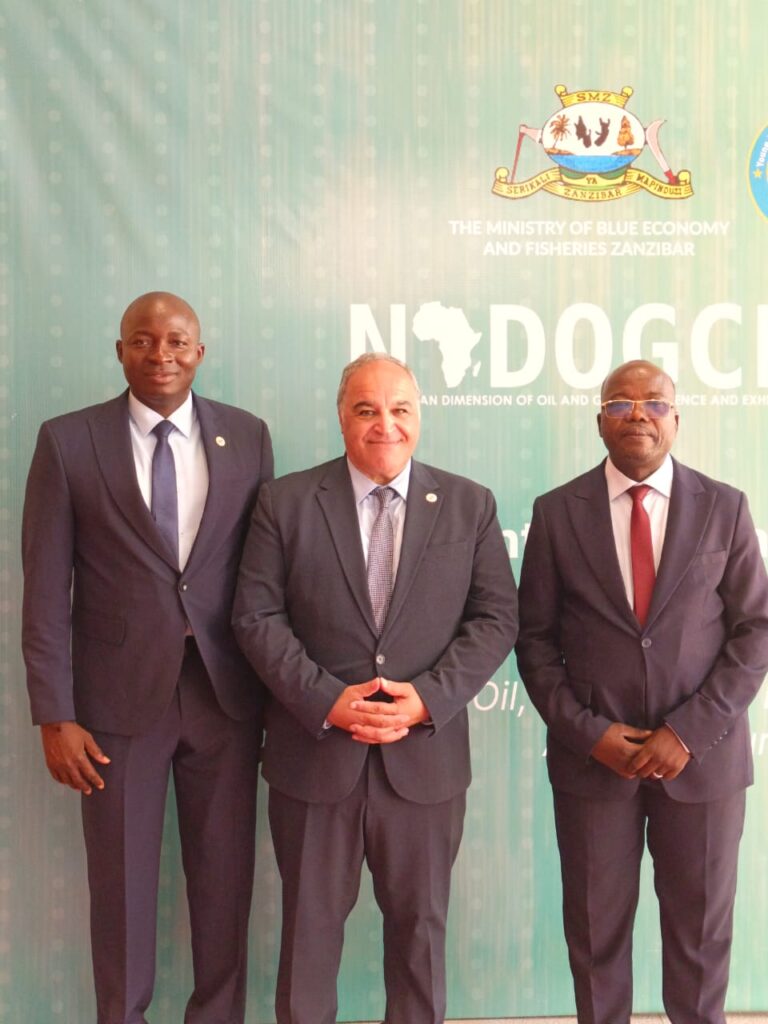
Let me begin by expressing my deep appreciation to the organisers, to our hosts, and to the government and people of Tanzania for their warm hospitality and their vision in convening NADOGCE26.
Tanzania is a country that embodies many of the strengths and hopes of Africa’s energy future: political stability, cultural richness, a strong sense of community, and an ambitious agenda for economic and social development. It is a nation blessed with natural beauty—from the shores of Zanzibar to the peaks of Kilimanjaro—and with a growing role in our continent’s energy landscape.
Holding this conference here is a powerful symbol. It reminds us that Africa’s energy story is not only about resources beneath the ground, but also about the people, the institutions and the places that are building bridges between oil, gas and clean energy.
It is therefore a special honour for me to speak today from Tanzania, a country that is helping to shape the dialogue on how we can use all our energy resources—traditional and new—to build a more prosperous, more resilient and more sustainable future for all Africans.
The theme captures both our challenges and our hopes: “Bridging the Oil, Gas and Clean Energy Sectors for Africa’s Future.”
This is more than a conference slogan. It is a question that concerns every African citizen:
- How do we use our oil and gas wisely?
- How do we scale up clean energy fast enough?
- And most importantly, how do we ensure that this energy transition truly serves the people of Africa?
My core message today is simple:
Africa’s future will not be built by opposing oil, gas and clean energy, but by intelligently connecting them.
We must move from either/or thinking to both/and solutions.
Part I – Africa’s Energy Reality
Let us start from our reality.
Africa is rich in energy resources: oil, gas, solar, wind, hydro, geothermal. Yet hundreds of millions of Africans still live without reliable electricity, and many rely on biomass for cooking. This is not just an energy statistic; it is a daily human constraint that affects health, education, jobs and dignity.
 At the same time, the world around us is changing quickly:
- Global climate commitments are tightening.
- Investors and financiers are shifting portfolios in the name of net zero.
- Technology costs for renewables are falling.
- New players and new business models are emerging, from off‑grid solar to green hydrogen.
In this context, Africa faces three simultaneous imperatives:
- Energy access – bringing modern energy to everyone.
- Economic development – using energy to industrialise and create jobs.
- Climate responsibility – contributing to global efforts without sacrificing our right to develop.
Our task is not easy, but it is possible. And it starts with recognising that oil, gas and clean energy all have a role to play in a just and pragmatic African transition.
Part II – Oil and Gas: Foundations, Not Obstacles
For many of our countries, oil and gas are still central pillars of the economy. They provide revenues, foreign exchange, infrastructure and skilled jobs. For some, they are the main source of public investment in health, education and roads.
We must be very clear:
For Africa, oil and gas are not simply “old energy”. They are current foundations that can finance the future.
The question is not whether we use them, but how we use them:
- We must maximise value from every barrel and every molecule, not just exports of raw commodities.
- We must reduce routine flaring and methane emissions, and invest in efficiency and cleaner technologies.
- We must allocate a portion of oil and gas revenues to diversify our economies and build clean energy infrastructure.
- We must ensure that communities in producing areas see real benefits: jobs, local content, shared infrastructure.
When we manage oil and gas with responsibility, transparency and long‑term vision, they become levers for transition, not obstacles to it. They become bridges: financing power lines, industrial parks, research centers, and renewable projects.
Part III – Gas as a Bridge Fuel for Development
Among hydrocarbons, natural gas has a special role to play in Africa.
Gas can:
- Power flexible electricity generation to stabilise grids as more renewables come online.
- Supply industry with reliable energy and feedstock.
- Replace biomass and kerosene for cleaner cooking, improving health and reducing deforestation.
- Serve as a feedstock for hydrogen and other low‑carbon fuels in the future.
For many African countries, gas is the bridge between under‑electrification and a cleaner energy system. It is not the final destination, but it is a critical step on the journey.
The key is to develop gas infrastructure—pipelines, LNG, storage, gas‑to‑power—in ways that:
- Support regional integration and cross‑border trade.
- Are compatible with future decarbonisation pathways.
- Unlock private investment, while protecting public interests.
In this sense, gas is both a development fuel and a transition fuel. It can help us light homes, power factories and clean up our cooking practices, while we build capacity in renewables and new technologies.
Part IV – Clean Energy: Scaling Up the Future
At the same time, we must accelerate clean energy deployment across Africa.
Solar, wind, hydro, geothermal and modern biomass are not just climate solutions; they are opportunities for:
- New industries and local manufacturing.
- Green jobs for youth and women.
- Decentralised energy access for rural communities.
- Reduced dependence on imported fuels.
 Our challenge is to move from pilot projects to scale, and from donor‑driven initiatives to truly sustainable markets. That requires:
- Clear, stable and transparent regulatory frameworks.
- Bankable contracts and risk‑sharing mechanisms.
- Regional power pools and transmission infrastructure.
- Strong institutions and local capacity to plan, negotiate and regulate.
Bridging the sectors means, for example:
- Using revenues and expertise from oil and gas to finance and manage renewable projects.
- Co‑locating solar and wind with gas plants for hybrid solutions.
- Using existing pipelines and terminals to support new fuels when they become viable.
Africa’s energy future will be built on diversity and flexibility, not on a single source.
Part V – Inclusive and People‑Centred Messages
Any conversation about energy must be inclusive and people‑centred.
Bridging oil, gas and clean energy is not just a technical or financial exercise. It is about:
- Which children can study at night under electric light.
- Which hospitals can operate reliably.
- Which small businesses can grow because they finally have power.
- Which communities share in the benefits of resources extracted from their land.
We must ensure:
- Local content and skills development so that African workers and companies are central to this transition.
- Gender inclusion so that women participate fully as professionals, entrepreneurs and decision‑makers in energy.
- Community engagement so that projects are designed with local voices, not imposed from above.
- Youth involvement so that the generation that will live with our decisions is part of making them.
An inclusive message we can carry from Zanzibar is this:
The bridge we are building is not just between energy sectors. It is between today’s realities and tomorrow’s opportunities for every African.
Part VI – Optimism with Responsibility
I want to be clear: there is every reason to be optimistic about Africa’s energy future.
We have:
- Some of the world’s best solar and wind resources.
- Significant oil and gas reserves that can be managed responsibly.
- A young, dynamic population ready to innovate.
- Growing regional cooperation and stronger institutions.
 But optimism must be matched with responsibility:
- Responsibility to avoid locking‑in high‑emission infrastructure that will become stranded.
- Responsibility to use resource revenues to diversify economies and invest in human capital.
- Responsibility to protect our environment and biodiversity.
- Responsibility to ensure that the benefits of energy reach those who need them most, not just a few.
If we combine pragmatism about our current needs with ambition for our future, we can design a transition that is truly African:
- Rooted in our realities.
- Aligned with our development goals.
- Contributing to global climate solutions.
Closing – Five Key Messages to Take Away
Ladies and Gentlemen,
Let me close with five key messages that I hope we can take from NADOGCE26:
- Oil, gas and clean energy are not enemies, they are partners. Our task is to orchestrate them intelligently for Africa’s benefit.
- Gas is a bridge we must cross wisely. It can power development and support transition—if we plan ahead.
- Clean energy must move from the margins to the centre. It is not an add‑on; it is a core pillar of our future growth.
- People must be at the heart of every energy decision. Inclusion, local content, gender equality and community benefits are non‑negotiable.
- Africa can lead, not just follow, in designing a pragmatic, just and ambitious energy transition. We have the resources, the talent and the political will—all we need is coordinated action.
My final, simple message is this:
If we bridge our energy sectors with courage and clarity, we will not only power Africa’s future—we will shape it.
Thank you.