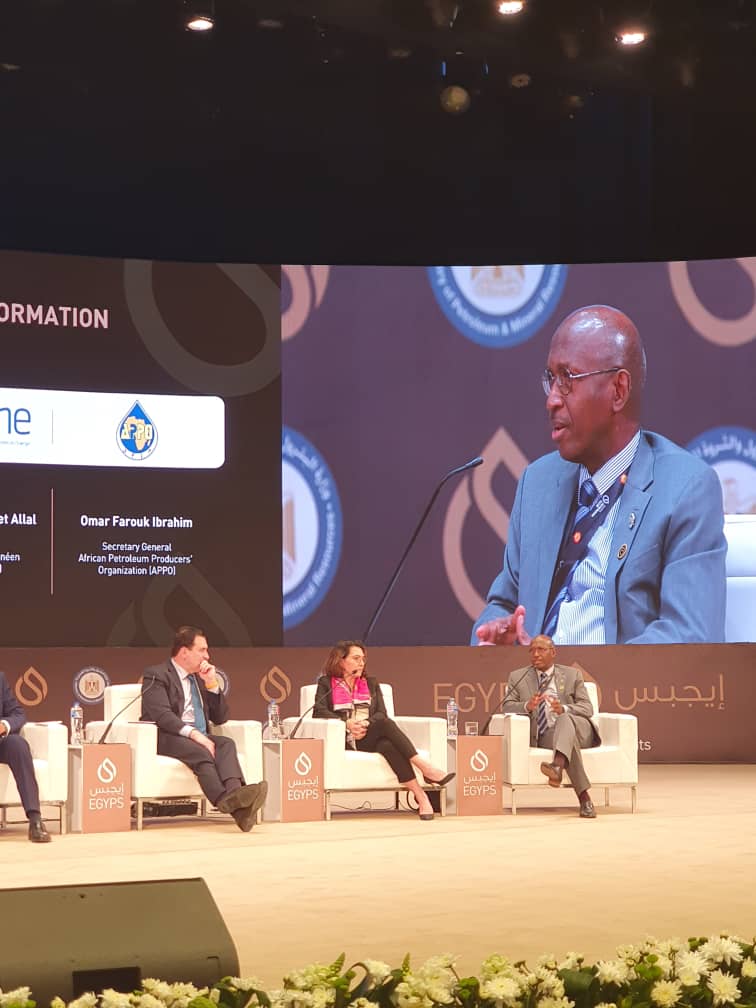
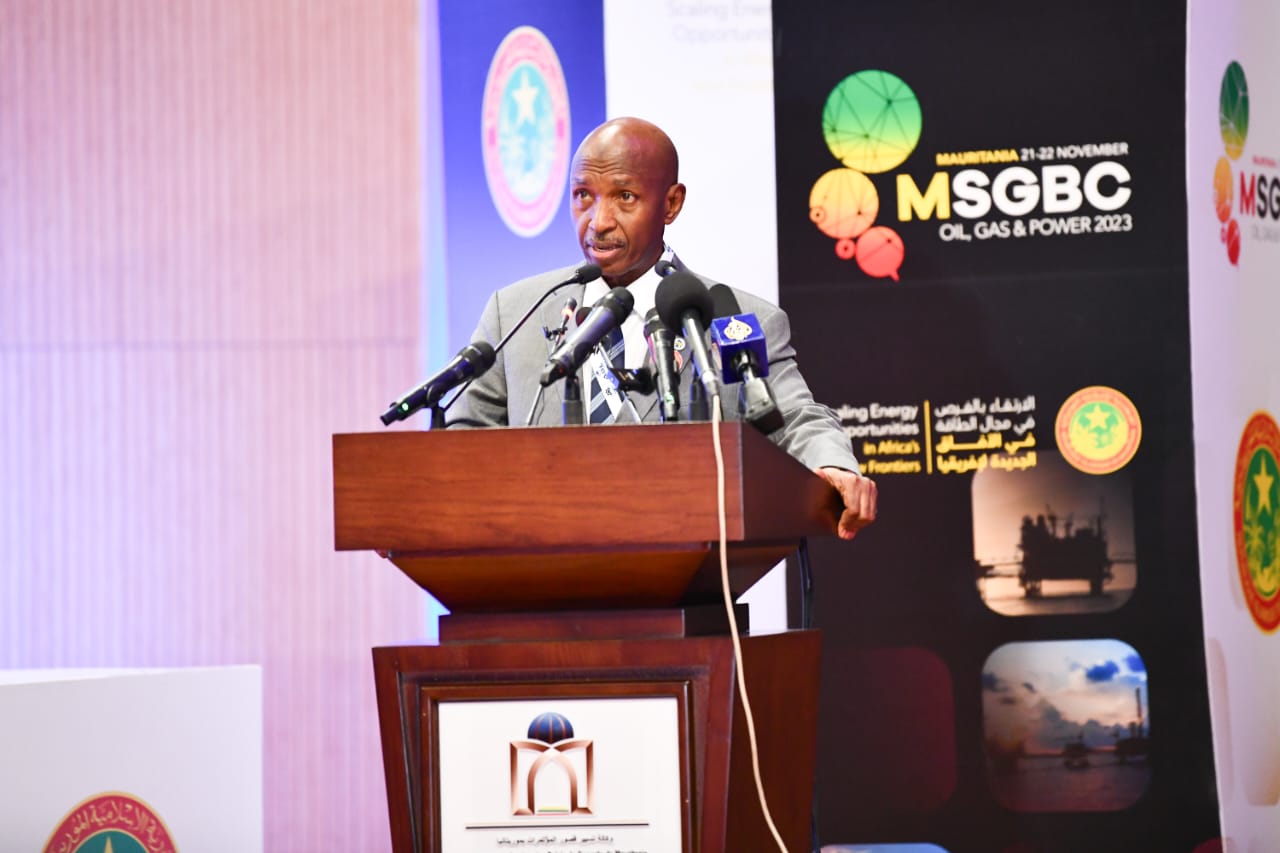
KEYNOTE ADDRESS TO THE MSGBC OIL, GAS AND POWER CONFERENCE 2025, DELIVERED BY H.E. DR. OMAR FAROUK IBRAHIM, SECRETARY GENERAL OF THE AFRICAN PETROLEUM PRODUCERS ORGANIZATION, APPO,
DAKAR, SENEGAL, 9 DECEMBER 2025
1. Your Excellency Bassirou Diomaye Faye, President of APPO Member Country the Republic of Senegal and Chief Guest of Honour at MSGBC 2025, Members of the APPO Ministerial Council and the Executive Board here present, other ministers, Excellencies Heads of International Organizations, CEOs of APPO NOCs and CEOs of IOCs and ISCs, the organizers of MSGBC led by the Madam Kelly, my brother in the struggle to bring a new energy order for the African continent, the indefatigable Dr. NJ Ayuk, captains of the industry, ladies and gentlemen
2. I thank Minister Birame Souleye Diop, and the organizers for the invitation to speak at MSGBC 2025. This being my last outing as the Secretary General of our continental energy organization, APPO, I would like to use this opportunity to highlight the key objectives we have tried to actively pursue in the last 6 years since the reform from APPA to APPO, and to appeal to our governments and people not to relent in the pursuit of the new energy order for the African continent that APPO and like-minded Organizations, like the Africa Energy Chamber, have been championing.
3. Before speaking about the new energy order that we are championing for our continent, I believe it will be helpful to describe the current order that we want to change. The current order is characterized by the following:
4. Heavy dependence on foreign finance to execute African energy projects in all sectors of the industry: upstream, midstream and downstream. Your Excellency, permit me to explain. For the nearly one hundred years that our countries have been producing oil and gas, we have been conditioned to believe that the energy industry is a highly capital intensive industry and that our countries are too poor to fund major energy projects. So, we have always looked to the developed countries for energy projects finance. In so doing, we came to see our God-endowed energy resources as export commodities, produced for those who have the foreign exchange to buy them, while we collect the dollars to run our governments and in many cases expend on grandiose projects and on the import of goods and services that benefit only a tiny minority of our population.
5. The second major characteristic is the near total dependence on foreign technologies for exploration, production, processing and other services of our energy resources. These technologies are conceived, developed and fabricated outside our continent and we import them to be able to access our God-endowed resources. We have been brainwashed into believing that these technologies are so sophisticated and so capital intensive that Africans do not have neither the research capability nor the finances to embark on them. So, we have resigned to dependency on technology importation. That explains why one hundred years after Africa has found oil and gas, we are yet to master the technology of the industry. If a small part in our refineries breaks, we have to import from outside.
6. The third defining character of the African oil and gas industry is that it was developed primarily as an export commodity industry, with a view to satisfying the energy needs of others, not our own people. How else can one explain the paradox of a continent with the largest proportion of the world’s population living without access to energy, exporting 75% of its crude oil and 45% of its gas to other people to further enhance their comfortable living standards while its own people are dying in hospital operating theatres due to lack of electricity? Again, we have been indoctrinated into believing in the economic theory of comparative advantage. Africans, we are told, are better suited to producing raw materials and importing finished products. This explains the irony of almost all oil producing countries on the continent exporting crude oil and importing refined products at exorbitant prices.
7. Excellencies ladies and gentlemen, these are the three main characteristics of the African energy industry that we are committed to changing, not in theory, as I will demonstrate shortly, and I should like to appeal to our leaders to continue to support APPO as it strives to wean the African energy industry from undue dependency.
8. The Africa Energy Bank: To address the funding challenge, APPO in 2022 signed an MoU with Afreximbank to establish the Africa Energy Bank. I am pleased to state that the AEB is now a reality, a legal entity, established by international treaty following the ratification by Ghana and Nigeria of the Establishment Agreement and Charter of the Bank, earlier this year. Furthermore, only a couple of weeks ago, on 27 November to be precise, the Nigerian Government formally received the keys to the fully furnished Headquarters of the AEB from its contractors, and as Minister Heineken Lokpobiri said at the ceremony, Nigeria is ready to handover the Headquarters to the promoters of the Bank. The only outstanding challenge for the take-off of the Bank is for APPO Member Countries to raise additional USD100 million to meet the minimum equity capital to start our USD5 billion Bank. I should like to use this opportunity to appeal to Member Country the Republic of Senegal and other APPO Member Countries that are yet to pay their subscriptions to the AEB equity shareholding to do so to enable Africa to begin to take its energy destiny in its own hands.
9. Establishment of Regional Centers of Oil and Gas Excellence:
Africa has proven crude reserves exceeding 125 billion barrels and over 650 trillion cubic feet of gas. Over two dozen countries on the continent have oil and or gas, and more findings are being made.
Yet, none of these countries, including those who have been in the industry for nearly a century, can say that they have mastered the technology of the industry.
Necessity, it is said, is the mother of invention. Now that those on whom we have been dependent have decided to focus their research away from oil and gas to renewable eenrgies, we have no choice but to learn and master those technologies.
But the existing model has failed us. The existing model is where each oil and gas producing country establishes oil and gas research, development and training institutions aiming to do everything from upstream to downstream and services and still expect to excel. These institutions operate in silos, not collaborating with similar institutions outside their territories and sometimes not even with similar institutions within their own territories. The Directors are happy being called CEOs even if their institutions are not producing optimal results.
The new model we are working to introduce is anchored on continent wide collaboration in research and training. We aim to establish regional centers of excellence across the continent in the various sectors of the oil and gas industry, upstream, midstream, downstream and also services. To achieve this objective, APPO from 2022 started creating fora for the key stakeholders in the project. We started with the Forum of CEOs of NOCs, then the Forum of Directors of Oil and Gas Research, Development and Innovation and the Forum of Oil and gas Training Institutions of APPO Member Countries. Our ultimate objective in creating these fora is to build consensus on having regional centers of excellence in the various sectors of the oil and gas industry.
Senegal may host the regional center of excellence in gas technology, another country to host midstream technology, while yet another hosts upstream etc. With time we can have more than one center of excellence for any sector. That way, we pool our resources together in terms of funds, brains, and together we take collective ownership. That is the way forward for Africa, not the silo approach that has characterized our efforts at development. At APPO, believe that Africa’s oil and gas development lies in cooperation and collaboration in research and training I areas of common challenges to us, not just in political sloganeering.
10. Creating Regional Energy Markets as Pre-requisite for Energy Access: On the final challenge, namely changing the predominantly export oriented energy market to creating an integrated regional and continental energy market, APPO believes that we need to discard the received wisdom that Africans are too poor to buy energy and so should produce their energy for those who can afford it. That belief must be discarded. And I am pleased to say that it is changing as evidenced in Senegal’s decision to dedicate gas from Yakaa Terangaa completely to domestic use. Thank you, Mr. President for that initiative as Senegalese also need energy to develop, not just dollars. Thank you Minister Diop and CEO Alioune for driving this exemplary initiative of Mr. President. We cannot have a billion people without access to energy and still be told that there is no market in Africa. There is a huge market waiting to be developed. And to do that we need to collaborate to establish cross border, cross regional and continent energy infrastructure to enable us move energy from areas of plenty to areas of need. In this respect, I am pleased to say that APPO has partnered with the Central Africa Business Energy Forum, CABEF, to promote the development of the Central Africa Pipeline System, CAPS, a project that aims to link 11 Central African states by Oil, Gas and Products pipelines.
11. In conclusion, Excellency, I appeal to our leaders, particularly those who hold the mistaken belief that Africa’s salvation lies in the hands of outsiders, to seriously have a rethink. I have spoken in the past about the imperative of a new paradigm shift in the search for solutions to the challenges that the global energy transition poses to Africa. For far too long, our leaders, especially academics and intellectuals who shape national opinions and by implication, public policy have abdicated their duties of critical and original thinking. Instead, they have become megaphones of the intellectuals, academics and media of the global North, lazily parroting ideas developed by others without critical evaluation. May I remind us that no foreign nation or nations shall develop Africa for us. We owe ourselves and future generations of Africans a duty to look within for the salvation of our continent. African academics, intellectuals, opinion influencers, policy makers businessmen and women and politicians owe this continent a duty to develop and institutionalize a new model for our development. The received model has failed us.
I cannot conclude my address without inviting all of you to join me in appreciating HE Bassirous Diomaye Faye for three reasons:
1. As SG of APPO I am most pleased when I go to oil and gas conferences that are organized under the auspices of the state, and I see the President attending. Your presence alone, Mr. Presence testimony to the importance that you give to the industry and that is enough catalyst to attract investment.
2. Second is what I mention about dedicating a part of your God-endowed energy resources to the development of your people, not selling everything to get dollars or euro.
3. And finally, I learnt last night that Your Excellency has given approval for Member Country the Republic of Senegal to pay its share in the equity of the Africa Energy Bank before the end of this month. With that payment, we are getting closer to launching the Africa Energy Bank.
12. I thank you for your kind attention.