Essalem Aalaykoum wa Rahmatoullah wa Barakatouh,
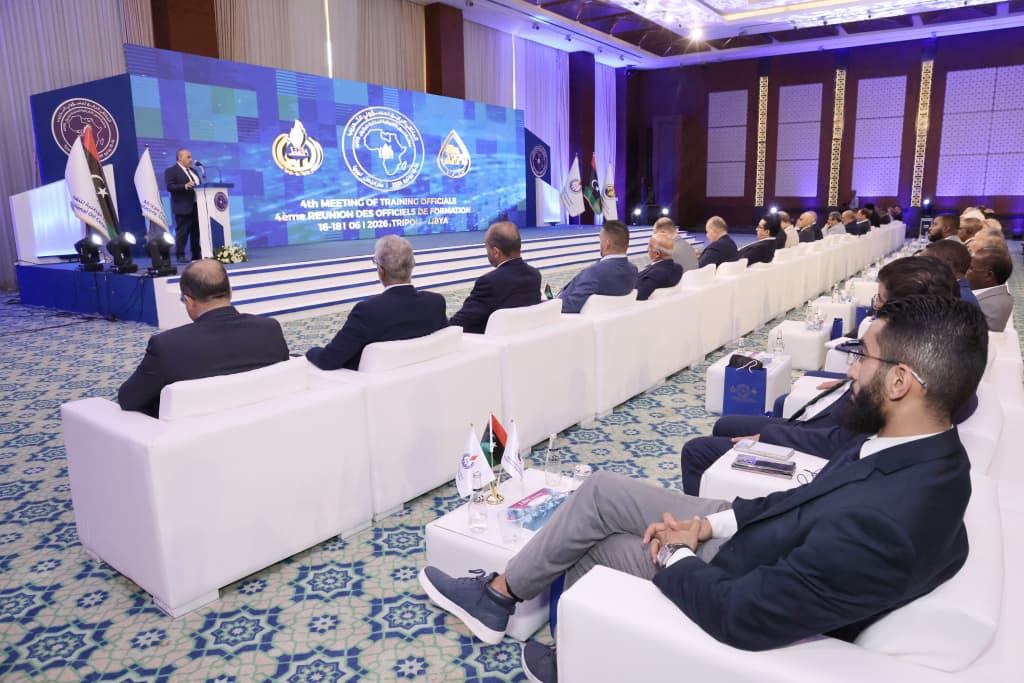
It is a special honor and a real pleasure for me to speak, on behalf of the Organization of African Petroleum Producers, on the occasion of this Forum of Training Centers and Institutes of APPO Member Countries, organized here in Tripoli, from June 16 to 18, 2026. First of all, I would like to express our deep gratitude to the State of Libya, its high authorities, the Ministry of Oil and Gas, the National Oil Corporation, as well as the host Institute, for the warm welcome, the fraternal attention and the remarkable quality of the arrangements made for all delegations. Allow me also to salute the city of Tripoli, a city of history, dignity and resilience; a Mediterranean city open to Africa, bearer of a deep memory and a renewed hope. By gathering here, in this capital that has given so much to the history of our continent and which remains a symbol of courage and reconstruction, we also want to send a message of confidence: Libya, through its human, energy and institutional potential, has its place in the African dynamic of cooperation, integration and shared progress. The hospitality that has been extended to us since our arrival confirms, once again, the generosity of the Libyan people, their sense of hospitality, their culture of fraternity and their attachment to the values of dialogue and African solidarity. We feel here not only invited, but welcomed as brothers and sisters, in a country that belongs fully to our common space, our common memory and our common future.
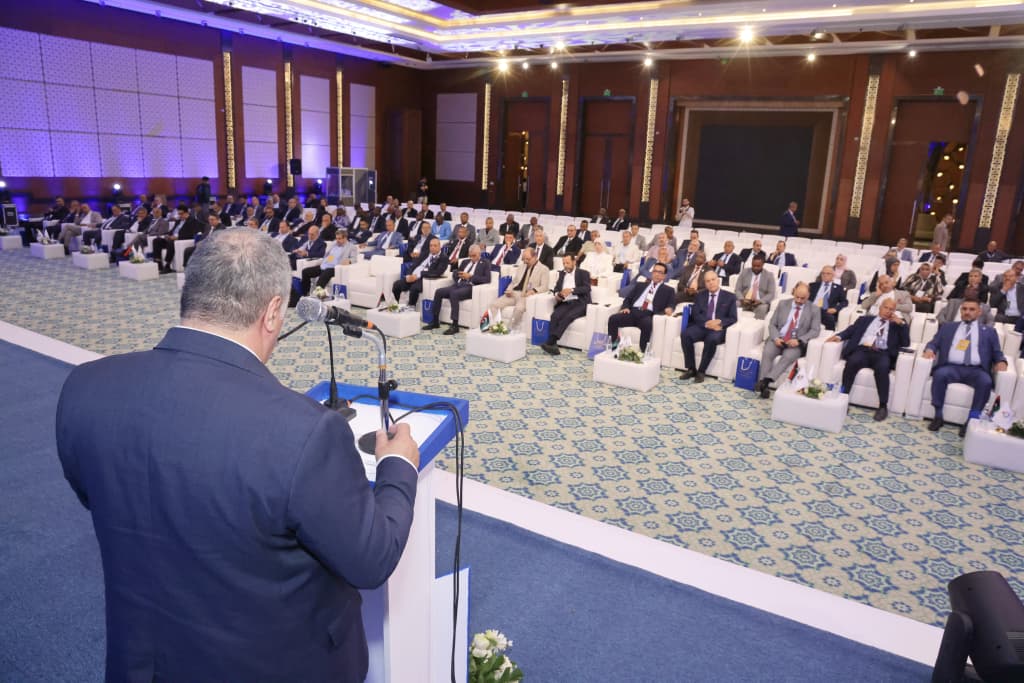 This Forum comes at an important time for our Organization and for the African energy sector. It brings us together around a simple but fundamental conviction: no sustainable transformation of the African oil and gas sector will be possible without a solid strategy of training, qualification, certification, digitalization and human capital development. Africa has considerable energy resources. It has promising oil and gas basins, dynamic institutions, committed national companies, recognized experts and talented youth. But we must also say it with lucidity: our training ecosystem is still too fragmented, sometimes insufficiently visible, poorly interconnected and often poorly coordinated on a continental scale. It is precisely to meet this challenge that APPO wanted to give this Forum a clear orientation: that of action, method, numerical coordination and results. This Forum must not be a simple protocol meeting. It must be a serious, useful and action-oriented workspace. We must leave Tripoli with tangible progress, structuring decisions and a realistic roadmap for the benefit of our Member States, our training institutions, our businesses and our youth.
In this regard, four priorities must guide our work.
Firstly, the development of a common training catalogue for APPO Member Countries.
Today, Africa train. It has competent institutes, specialized centers, quality programs and recognized expertise. But this offer is often dispersed, insufficiently catalogued and difficult to read on a continental scale. The common catalogue that we are calling for must not be a simple administrative inventory. It must become a strategic reference tool, making it possible to identify the institutions available, the specialties offered, the levels of training offered, the conditions of access, the reception capacities and the possibilities of cooperation between institutions. Such a catalogue will allow a ministry, a national company, a company, a young professional or a technical partner to clearly know where to find the appropriate training, under what conditions, with what level of requirement and with what added value for the sector. It is therefore an instrument of visibility, but also an instrument for planning, pooling and integrating African skills.
 Secondly, the conclusion of a framework agreement between the training institutes and centres of the APPO Member Countries.
We need to move from one-off cooperation to structured, sustainable and institutionalised cooperation. Africa can no longer be satisfied with good intentions. It needs common mechanisms, formalized frameworks and coordination tools that allow our institutions to work together with continuity, discipline and efficiency. This framework agreement should facilitate the exchange of experiences and good practices, encourage the mobility of trainers, learners and experts, support the pooling of resources, promote the development of joint programmes, and create lasting bridges between training institutes in Member Countries. Beyond its administrative scope, this convention must carry a greater ambition: that of an Africa that organizes the development of its human resources itself and that builds, through its own institutions, the foundations of its technical sovereignty. Energy professions are evolving rapidly. The requirements for security, environmental performance, governance, digitalization, energy transition and local content are becoming increasingly complex. In this context, cooperation between our training centres is not an option. It is a strategic necessity.
 Thirdly: certification, APPO recognition and the establishment of preferential conditions of access to training.
If we want our training courses to be credible, attractive and useful, we must give them a value that is recognised on a continental scale. Certification brings rigour, legibility and confidence. It ensures that the training courses meet identified standards and that the skills acquired are measurable, verifiable and valuable. The APPO recognition, for its part, will give these courses a continental dimension. It will be a label of quality, seriousness and alignment with the strategic priorities of the African oil and gas sector. Finally, the question of a preferential or even symbolic tariff for learners from Member Countries must be carefully examined. It reflects a fundamental principle of African solidarity. We cannot talk about skills development without questioning the real accessibility of training. Making training more accessible to our young people, technicians, managers and future experts is not just a social gesture. It is a strategic investment in our human, technical and industrial sovereignty.
Fourth: the digitalization and deployment of the APPO platform dedicated to training.
The fourth priority concerns digitalisation. It must be approached not as a simple technical tool, but as a strategic lever for structuring, visibility, monitoring and networking of our African energy training area. In this spirit, APPO has initiated the development of a digital platform dedicated to training, designed to operationally support the work of this Forum and extend its results beyond the Tripoli meeting. This platform should make it possible to centralise information on training institutes and centres, to make available programmes visible, to facilitate access to the common catalogue, to monitor the needs expressed by Member Countries, to identify critical specialties and to create a space for exchange between institutions, trainers, learners and partners in the sector. It will also be an instrument for monitoring the commitments made under the Framework Convention, in particular on mobility, joint programmes, mutual recognition, certification, co-certification and sharing of educational resources. Ultimately, this platform will need to support more flexible and inclusive training formats, including through hybrid modules, online sessions, shared content, monitoring dashboards and reporting mechanisms for APPO to measure the progress made by member institutions. Digitalization thus offers us an important opportunity: to reduce distances, accelerate cooperation, make our offers more accessible, strengthen transparency and give our training policies continuity beyond physical meetings. But this digital ambition will have to remain framed by clear principles: data security, quality of content, institutional responsibility, regular updating of information and appropriation by Member Countries. A platform is only valuable if it is powered, used, and ported collectively. This is why I invite training institutes and centers to consider this platform as a common tool for work, monitoring and convergence, in the service of a broader objective: to build a true African energy training ecosystem, modern, interconnected and oriented towards the real needs of our industry.
 Ladies and gentlemen,
The deep meaning of our approach is clear: there can be no energy sovereignty without sovereignty of competences. There can be no energy integration without the integration of knowledge. There can be no sustainable transformation without institutions capable of training, certifying, qualifying, digitizing and supporting the women and men who will carry out this transformation. We have to train to produce. Training to transform. Training to reg
ulate. Train to manage. Training to innovate. Also to train to master the digital tools that are transforming our professions, our working methods and our modes of cooperation. That is why I invite all participants to conduct the work of this Forum in a spirit of frankness, ambition and responsibility.
Frankness, to clearly identify our strengths, weaknesses and real needs.
Ambition, to think beyond national borders and build truly African solutions.
Responsibility, finally, to make this Tripoli Forum not just another event, but an operational starting point towards a more coherent, more visible, more digitalized and more credible African energy training space.
History teaches us that no profound transformation takes place without vision, without method and without skills. Africa’s energy future will depend on our ability to train, qualify, certify, recognize, and connect our continent’s talent. By expanding access to training, harmonizing our offers, enhancing the value of our institutes, certifying our courses, digitizing our cooperation mechanisms and creating preferential conditions for our learners, we are laying the foundations for a stronger, more autonomous Africa that is better prepared for the energy challenges of tomorrow. May Tripoli be, for our work, more than a place of welcome: may it be the symbol of recovery, convergence and shared hope for the future of African energy skills. I wish every success in our work and express the hope that this Forum will produce concrete, useful and lasting results for all our Member Countries.
Thank you for your kind attention.
 Ce Forum intervient à un moment important pour notre Organisation et pour le secteur énergétique africain. Il nous réunit autour d’une conviction simple, mais fondamentale : aucune transformation durable du secteur pétrolier et gazier africain ne sera possible sans une stratégie solide de formation, de qualification, de certification, de digitalisation et de valorisation du capital humain. L’Afrique dispose de ressources énergétiques considérables. Elle dispose de bassins pétroliers et gaziers prometteurs, d’institutions dynamiques, d’entreprises nationales engagées, d’experts reconnus et d’une jeunesse talentueuse. Mais nous devons également le dire avec lucidité : notre écosystème de formation demeure encore trop fragmenté, parfois insuffisamment visible, faiblement interconnecté et souvent peu coordonné à l’échelle continentale. C’est précisément pour répondre à ce défi que l’APPO a souhaité donner à ce Forum une orientation claire : celle de l’action, de la méthode, de la coordination numérique et des résultats. Ce Forum ne doit pas être une simple rencontre protocolaire. Il doit être un espace de travail sérieux, utile et orienté vers des livrables concrets. Nous devons sortir de Tripoli avec des avancées tangibles, des décisions structurantes et une feuille de route réaliste au service de nos États membres, de nos institutions de formation, de nos entreprises et de notre jeunesse.
 Premièrement : l’élaboration d’un catalogue commun de formation des Pays Membres de l’APPO.
 Mesdames et Messieurs,