With its 18 Member Countries, APPO holds almost all of Africa’s oil reserves. This article details the distribution of these reserves under the continent’s subsoil.
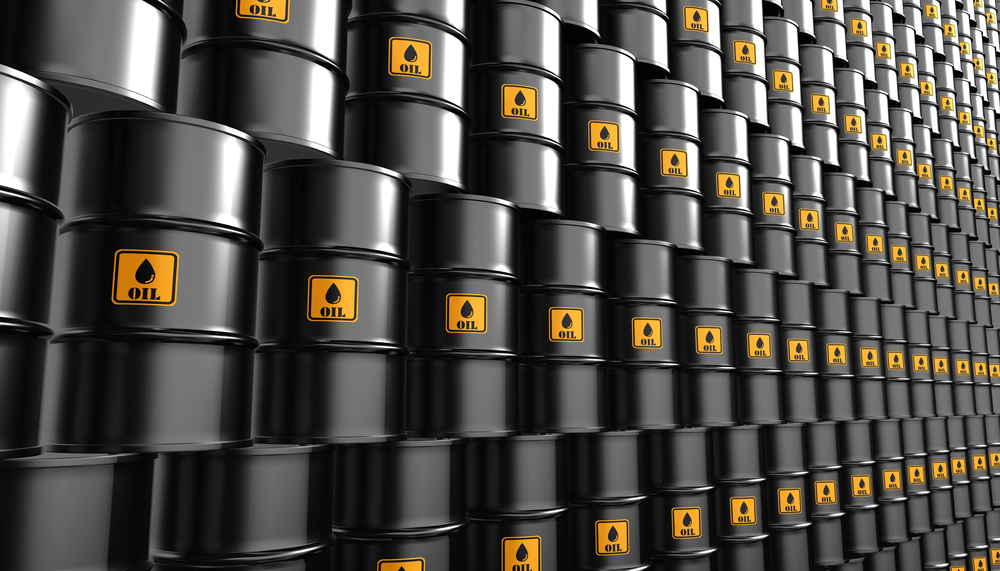
Proven crude oil reserves are the quantities of crude oil that, after analysis of geological and technical data, can be estimated with reasonable certainty to be commercially recoverable, as of a given date, from known reservoirs and under current economic conditions, operating methods and government regulations. In 2024, the world’s proven crude oil reserves were estimated at 1566 billion barrels with more than 50% located in the Middle East region. Africa, with 119.363[1] billion barrels of reserves, holds nearly 7.5% of the world’s reserves.
Libya, Nigeria and Angola lead the way
More than 80% of these African reserves are located in three countries, all members of the African Petroleum Producers’ Organization (APPO). At the head of the pack is Libya, which alone holds 40% of Africa’s reserves. It is followed by Nigeria and Angola with 31% and 10% respectively. If we add the proven reserves of its other Member Countries, APPO holds in total more than 90% of Africa’s oil reserves. Over the past five years, the proven oil reserves of these Member Countries have remained relatively stable, but a significant increase in the APPO’s oil reserves is expected during this year. Indeed, according to Rystad Energy, Africa will concentrate about 40% of the so-called “high-impact” oil and gas exploration wells planned in the world by 2026. These high-impact wells correspond to exploration drilling with high discovery potential, due to the expected volumes of resources or the still underexplored nature of the targeted areas, says Rystad Energy.[2]
New discoveries
New oil discoveries have been made since the beginning of 2026. This is the case, for example, in Angola, where Azule Energy, a joint venture operated by BP plc and ENI SpA, has announced the offshore oil discovery with a preliminary estimate of reserves at 500 million barrels, in Block 15/06 of the lower province of Congo (offshore Angola). Similarly, in Côte d’Ivoire, the Ministry of Mines, Petroleum and Energy declared on February 16, a new discovery, named CALAO South, by the oil group ENI in partnership with PETROCI Holding, whose reserves are estimated at nearly 1.4 billion barrels of oil equivalent. The challenge therefore remains to use these oil reserves efficiently in order to solve the problems of industrialization and energy poverty from which Africa suffers severely in a global context of energy transition.
[1] OPEC, ABS2025
[2] https://www.agenceecofin.com/actualites-industries/3001-135346-exploration-petroliere-l-afrique-concentrera-40-des-puits-a-fort-impact-en-2026